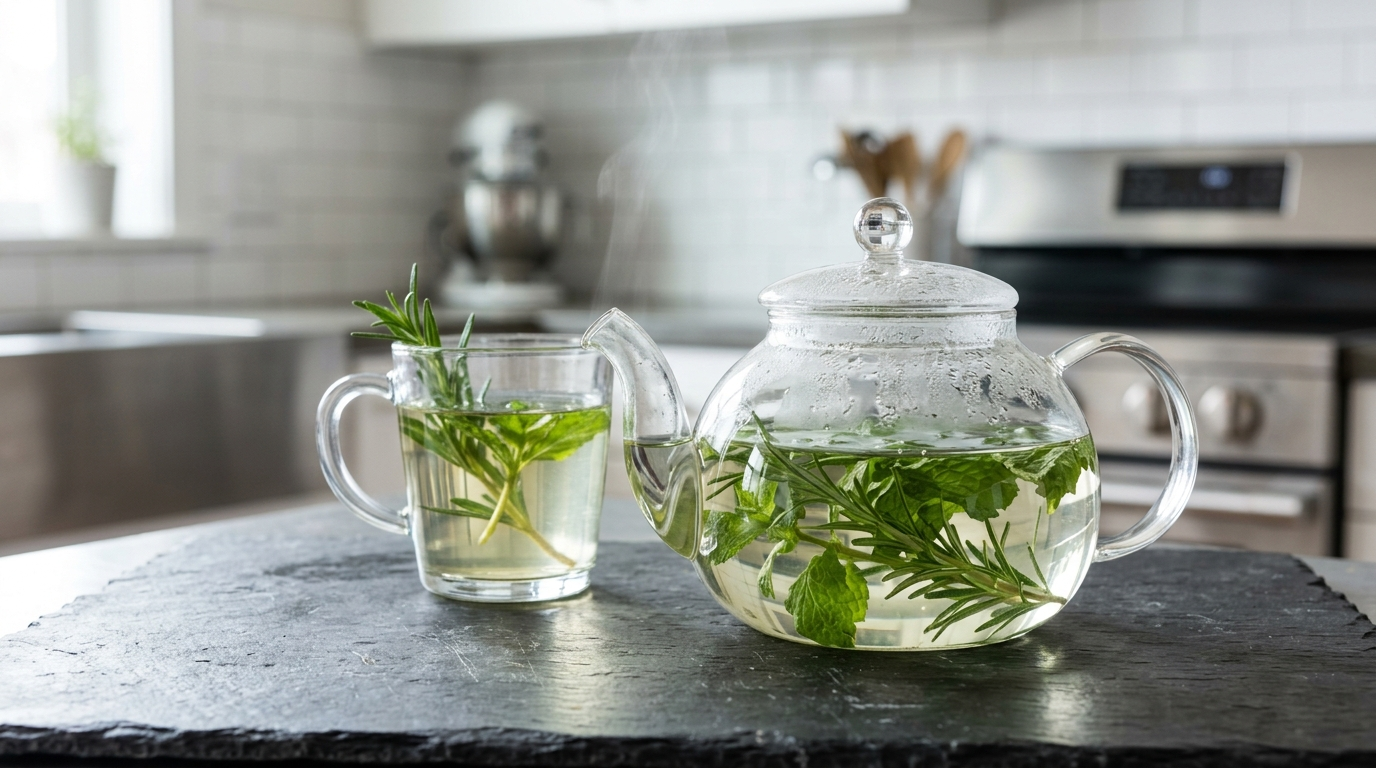
Blog Post: Rosemary & Peppermint Tea for Headaches
Category: Remedies | Est. reading time: 4 minutes
The Problem
Headaches are one of the most common health complaints in the world. Tension headaches, sinus headaches, stress headaches, and even migraines affect millions of people daily. The typical response? Reach for ibuprofen, acetaminophen, or aspirin.
But there is a natural alternative that has been used for centuries — and modern science is starting to understand why it works.
Rosemary and peppermint tea is simple, inexpensive, and effective for many types of headaches. No pills. No side effects (when used properly). Just two herbs and hot water.
Why This Works
Each herb brings its own headache-fighting compounds to the cup.
HerbActive CompoundWhat It DoesRosemaryRosmarinic acidReduces inflammation in blood vessels and tissuesRosemaryCaffeic acidAntioxidant that protects nerve cellsRosemaryCirculatory stimulantsImproves blood flow to the brainPeppermintMentholRelaxes tense muscles in the neck, shoulders, and scalpPeppermintMenthoneMild sedative effect; calms the nervous systemPeppermintAromatic compoundsThe smell alone has been shown to reduce headache intensity
Here is what the research says about each:
Rosemary improves blood circulation throughout the body, including to the brain. Poor circulation and constricted blood vessels are common contributors to tension headaches and migraines. Rosemary also contains rosmarinic acid, a compound with anti-inflammatory effects that can reduce swelling in the tissues surrounding the brain.
Peppermint contains menthol, which relaxes smooth muscles — including the muscles in your neck, shoulders, and scalp that often tighten during a headache. One study found that applying peppermint oil to the temples reduced headache pain as effectively as 1,000 mg of acetaminophen. The aroma alone has been shown to reduce headache intensity, which is why inhaling the steam is just as important as drinking the tea.
Together, these two herbs work as a team: rosemary improves blood flow and reduces inflammation, while peppermint relaxes muscles and calms the nervous system.
Types of Headaches This Tea Helps With
Headache TypeHow Rosemary & Peppermint HelpTension headachePeppermint relaxes tight neck and scalp musclesSinus headacheThe steam opens nasal passages; anti-inflammatory compounds reduce sinus swellingStress headachePeppermint calms the nervous system; rosemary improves circulationMigraine (mild to moderate)Some evidence that menthol and rosmarinic acid reduce migraine intensityHangover headacheHydration + improved circulation + anti-inflammatory effects
Note: This tea is not a substitute for prescription migraine medication. If you have chronic or severe migraines, continue working with your doctor.
What You Need
- 1 sprig fresh rosemary (or 1 teaspoon dried rosemary)
- 5–6 fresh peppermint leaves (or 1 teaspoon dried peppermint)
- 2 cups boiling water
- Raw honey to taste (optional)
- A teapot or large mug with a lid (covering is important — it traps the volatile oils)
Instructions
StepAction1Place rosemary and peppermint in a teapot or large mug2Pour 2 cups of boiling water over the herbs3Cover and steep for 8–10 minutes (covering prevents the volatile oils from escaping with the steam)4Strain into a cup5Add raw honey to taste if desired6Before sipping, inhale the steam deeply for 30–60 seconds
The steam inhalation is just as important as drinking the tea. Menthol and rosmarinic acid are aromatic compounds that enter your bloodstream through your nasal passages and lungs, providing faster relief than drinking alone.
Best Time to Drink This Tea
SituationWhen to DrinkAt the first sign of a headacheImmediately — early intervention works bestDuring a tension headacheSip slowly over 15–20 minutesBefore a known triggerIf you know a stressful event will trigger a headache, drink it 30 minutes beforehandBefore bed after a stressful dayPrevents morning tension headachesAs neededUp to 3 cups per day
What to Expect
TimeEffectWithin 5–10 minutesSteam inhalation begins to clear sinuses and relax tight musclesWithin 20–30 minutesPeppermint's muscle-relaxing effects reduce neck and scalp tensionWithin 45–60 minutesRosemary's circulation-boosting and anti-inflammatory effects peakAfter 1–2 cupsMost tension headaches significantly reduce or disappear entirely
Pro Tips for Best Results
TipWhy It HelpsUse fresh herbs when possibleFresh rosemary and peppermint contain higher concentrations of volatile oilsCover while steepingTraps menthol and rosmarinic acid in the water instead of letting them evaporateInhale before you sipAromatic compounds provide almost instant relief through nasal passagesApply gentle pressure to templesWhile sipping, massage your temples in small circles for 1–2 minutesDrink in a dark, quiet roomReduces external stimuli that can worsen headachesStay hydratedDehydration is a common headache trigger; this tea helps
Variations to Try
VariationHow to MakeBest ForStronger teaUse 2 sprigs rosemary and 10–12 peppermint leavesSevere tension headachesWith gingerAdd 3–4 slices of fresh gingerSinus headaches; nausea associated with migrainesWith lemon balmAdd 5–6 lemon balm leavesStress-related headaches; anxietyWith lavenderAdd 1 teaspoon dried lavender flowersMigraines; sleep-related headachesIced versionBrew double-strength, chill, pour over iceWarm-weather headaches; hangovers
Who Should Be Careful With This Tea
ConditionPrecautionPregnancySmall amounts are likely safe, but avoid medicinal doses of rosemary (can stimulate uterine contractions)BreastfeedingGenerally safe as a tea, but consult your doctorGallbladder diseaseRosemary may stimulate bile flow; could worsen symptoms in some peopleBlood thinnersRosemary contains vitamin K and may affect blood clottingHigh blood pressureRosemary can temporarily raise blood pressure in some peopleGERD / acid refluxPeppermint can relax the lower esophageal sphincter, worsening refluxIron deficiencyRosemary can reduce iron absorption; drink between meals instead of with food
If you take prescription medications, check with your doctor before using rosemary medicinally (as a tea or supplement). Peppermint tea is generally very safe for most people.
When This Tea Is Not Enough
See a doctor if your headaches:
- Are severe and sudden (often called a "thunderclap" headache)
- Come with fever, stiff neck, confusion, or vision changes
- Occur after a head injury
- Wake you up from sleep
- Are accompanied by weakness or numbness on one side of the body
- Increase in frequency or severity over time
These could be signs of a more serious condition requiring medical attention.
How This Compares to Over-the-Counter Pain Relievers
AspectRosemary & Peppermint TeaIbuprofen / AcetaminophenSpeed of reliefSlower (20–30 minutes)Faster (15–20 minutes)Side effectsVery few (mild)Stomach irritation, liver damage (with overuse)CostPennies per cupDollars per doseReaction timeBest at first sign of headacheWorks regardless of timingSevere headachesLess effectiveMore effectiveRegular useSafe for daily useNot recommended for daily use
For mild to moderate tension headaches, this tea is an excellent first line of defense. For severe migraines or chronic headaches, continue working with your doctor.
The Bottom Line
Rosemary and peppermint tea is a safe, inexpensive, and effective natural remedy for tension headaches, sinus headaches, and stress-related headaches. The combination of improved circulation, muscle relaxation, and anti-inflammatory compounds addresses multiple root causes at once.
Keep these herbs in your kitchen. The next time you feel a headache coming on, skip the medicine cabinet and head to the stove.
Pin This For Later
Rosemary and peppermint tea for headaches — improves circulation, relaxes tense muscles, reduces inflammation. Inhale the steam, sip slowly, feel better.
Important Note
A note from Rooted Remedy: Natural remedies are powerful, but they are not instant. Unlike pharmaceutical drugs that force a chemical change, herbs and foods work gently with your body's own systems.
This takes time. Consistency is the secret. Give each remedy at least 5–7 days of regular use before deciding if it works for you.
Sources & References
Information in this article was compiled from publicly available educational resources and scientific literature, including:
- National Institutes of Health (NIH)
- Centers for Disease Control and Prevention (CDC)
- Mayo Clinic
- Cleveland Clinic
- Harvard Health Publishing
- PubMed Research Database


